Writer * Worldbuilder * Life Coach
Magicians and the Bliss of a Well Told Story
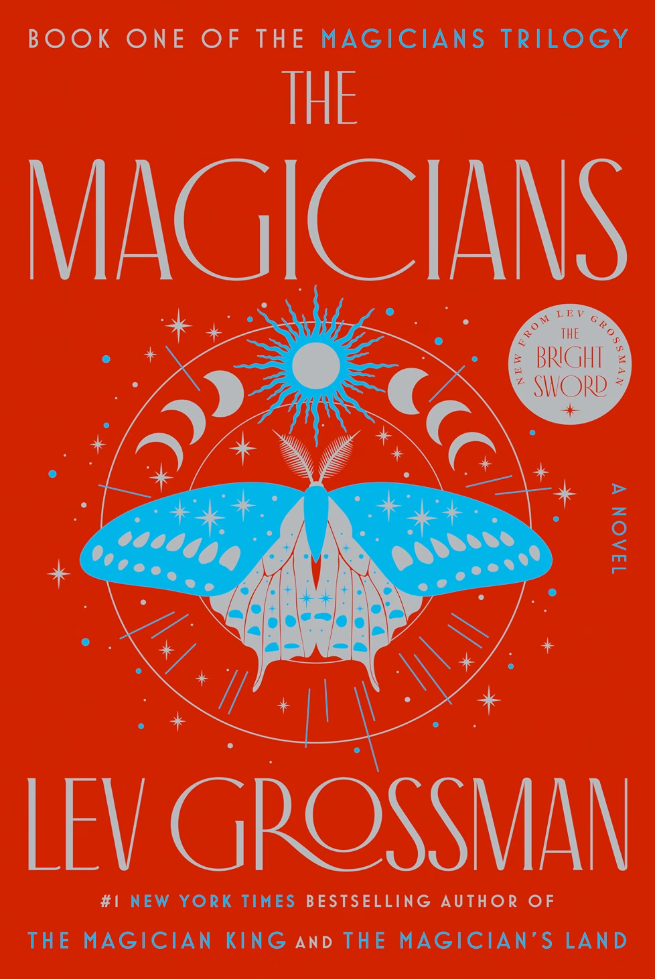
I should be grading essays right now, but life is all about balance, and I love reading and writing.
I recently accidentally wandered my way back into one of my favorite books, and I found myself re-reading a section because of the joy and creativity of the language and the tone.
The Magicians by Lev Grossman has been described as like a Harry Potter for adults. Quentin Coldwater discovers a secret college where magic is taught, and he is given admission. The book, however, harbors a much darker story concerning how even the joyous world of magic could devolve, like all joys, into mundanity and boredom (and it also presents flawed characters who make terrible choices). And yet, the depth and richness of the worldbuilding and the cleverness of the language make this masterpiece of a book a thoroughly fun adventure. For some. It does like big words and seems to have a dark view of people’s natures.
One storyline in the book is main character Quentin Coldwater’s love of a childhood series in his world of a family of children in the pre-war British countryside who find their way into a magical world called Fillory (a thinly-veiled but distinctive replica of C.S. Lewis’s The Chronicles of Narnia). Quentin, after surviving an ordeal and finishing the school year, sprawls on his bed and reconnects with his old narrative love.
Here’s a sample:
“As [Quentin] usually did when he was stuck at home, he went on a Fillory binge.
“The world inside the books was fresh and vital as ever, unfaded and unironized by time. Quentin had never before really appreciated the cleverness of the second book. The Girl Who Told Time, In which Rupert and Helen are abruptly Shanghaied into Fillory straight out of their respective boarding schools, the only time that Chatwins crossover in winter instead of summer. They end up back in an earlier time period, the one that overlaps with the storyline of the first book. With the aid of foreknowledge, Rupert dogs Martin and Helen’s footsteps—the earlier Helen’s— as they repeat the action of The World in the Walls, note for note. He keeps just out of view, dropping clues and helping them out without their knowledge (the mysterious character known only as the Wood One turns out to have been Rupert in disguise); Quentin wondered if Plover wrote The Girl Who Told Time Just to shore up all the plot holes in The World in the Walls.
“At the end, the twin rams Ember and Umber show up as usual, like a pair of sinister ruminant constables. They were a force for good, of course, but there was a slightly Orwellian quality to their oversight of Fillory: They knew everything that went on, and there was no obvious limit to their powers, but they rarely bestirred themselves to actively intervene on behalf of the creatures in their charge. Mostly they just scolded everybody For the mess they’d made, finishing each other‘s sentences, then made everyone renew their vows of fealty before wandering away to crop some luckless farmer’s alfalfa fields. They firmly usher Rupert and Helen back into the real world, back into the damp, chilly, dark-wood-paneled halls of their boarding schools, as if they had never left it.”
How much fun is that?
Well, the narrator/Quentin actually sees some problems with the story and yet, he STILL LOVES IT.
I love this editorializing and critiquing of another story’s heroes and forces for good. It says something about adults who want to still believe in the simplicity of a fantastic world of good and evil, but who know better and have seen some sh… stuff. Wait till you get a little older – you may relate to this yourself.
Life offers many wonderful, incredible, unreal adventures. AND THEN life on the other side becomes both better and worse because of them.
I hope some are now intrigued by The Magicians. But don’t say I didn’t warn you.


